
Home solar
Advanced hybrid home solar systems
Lower your electricity bill and keep essential appliances running through power cuts with a hybrid solar system designed for your home.
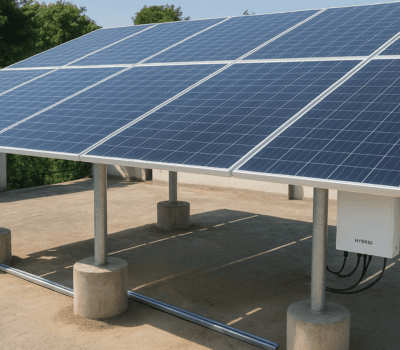
Synergy Hybrid Solar is a top provider of hybrid home solar system installations in India.Hybrid solar systems are becoming the go-to solution for homeowners looking for a reliable, eco-friendly, and cost-effective way to power their homes. These systems combine the best of both worlds—on-grid and off-grid solar—by integrating battery storage with the solar panel setup. This makes them ideal for homes seeking a more advanced, flexible energy solution.
In this guide, we’ll dive into what hybrid solar systems are, how they work, and why they might be the perfect choice for your home.
Key components of an advanced hybrid solar system
Solar Panels: Capture sunlight and convert it into electricity.
Hybrid Inverter: Manages power between solar panels, battery storage, and the grid.
Battery Storage: Stores excess electricity for use when the solar panels aren’t producing enough, such as during the night or on cloudy days.
Smart Energy Management System: Advanced hybrid systems often come with a smart management system that optimizes energy use, allowing for real-time monitoring and automation.
How does a hybrid home solar system work?
Evening/Night: Your home draws from the battery when solar production is low.
Daytime: Solar panels generate electricity. Your home uses what it needs, and the excess is stored in the battery.
Power Outage: During an outage, your hybrid system can act as a backup, supplying electricity from the battery.
Grid Integration: If your battery runs out, the system will automatically switch to the grid for power.
Choosing the right hybrid home solar system
When selecting a hybrid solar system for your home, consider the following:
System size
Ensure that the solar panel capacity and battery storage are appropriate for your energy needs.
Battery capacity
Choose a battery with enough storage to power essential appliances and lights during outages
Inverter efficiency
High-quality hybrid inverters are key to ensuring efficient energy management between your solar panels, batteries, and the grid.
Monitoring systems
Opt for systems that come with smart energy management apps or platforms so you can monitor usage and optimize energy savings.
Benefits of advanced hybrid solar systems for homes
Energy independence
Hybrid systems allow homeowners to use stored energy, reducing reliance on the grid and minimizing energy bills.
Backup power
With battery storage, you have a backup during power outages, ensuring that essential appliances and devices remain powered.
Cost savings
Storing excess energy for later use can reduce the need to draw from the grid, saving money on electricity bills.
Renewable energy credits
In many regions, homeowners can sell excess electricity back to the grid, earning credits and reducing electricity costs further.
Grid independence
You can become less reliant on the utility grid, especially in regions with unreliable grid power.
Increased home value
Installing a hybrid solar system can increase the value of your home, as more buyers look for energy-efficient and sustainable solutions.
Maintenance and costs for hybrid home solar
While hybrid Home solar systems have a higher initial cost than traditional grid-tied systems, the long-term savings on energy bills and the ability to avoid costly power outages make them a worthwhile investment. Maintenance is minimal, with routine checks on the battery and inverter performance ensuring a long lifespan.
Typical costs for hybrid solar systems vary based on the size of the system and the quality of components. On average, you can expect:
Battery Replacement Costs: Every 10-15 years, expect to replace the battery, which can cost around $5,000 - $7,000.
Installation Costs: $10,000 - $25,000, depending on the system size and components.
Other types of home solar systems
We provide a variety of customizable solar systems tailored to the unique energy needs of homes, ensuring that each system is designed to meet specific household requirements and preferences.
On-grid solar systems
Perfect for homes looking to reduce their electricity bills while remaining connected to the main power grid. On-grid systems allow homeowners to offset their energy usage and send any surplus power back to the grid for potential energy credits.
Benefits:
- Significant savings on electricity bills
- Ability to export excess energy to the grid for credits
- Low maintenance and easy integration with existing systems
- Suitable for areas with reliable grid access
Off-grid solar systems
Ideal for homes in remote areas or those seeking complete energy independence. Off-grid systems generate and store electricity using solar panels and batteries, providing reliable power even in locations without grid connectivity or during power outages.
Benefits:
- Total energy independence, free from grid reliance
- Customized solutions to match household energy consumption
- Reliable battery storage for continuous power supply, even at night or during outages
Explore the possibilities
Your solar savings, at a glance
An indicative estimate from your electricity bill. A load study and site survey are needed for a real proposal.
Indicative estimate
Suggested solar capacityValue of units offset per month
Your path to solar
From first conversation to a working system
- 01
Tell us about your energy use
Share your electricity bill, location and the appliances you want backed up.
- 02
Site and load assessment
We check roof or land, shading, structure, wiring, loads and grid conditions.
- 03
System recommendation
You get a proposal with panels, inverter, storage, estimated generation and an itemised price.
- 04
Installation and support
We handle approvals, installation, commissioning, net metering and after-sales service.
FAQs
Frequently asked questions
What is a hybrid solar system?
A hybrid solar system combines solar panels, a hybrid inverter, battery storage and a grid connection. Solar powers your loads during the day, surplus energy charges the batteries, and the grid tops up whenever solar and batteries are not enough. When the grid fails, the inverter can switch selected loads to battery backup.
Is a hybrid solar system the same as an on-grid system?
No. A standard on-grid system has no batteries and shuts down during a power cut for safety. A hybrid system adds batteries and an inverter that can keep chosen circuits running when the grid is down, while still working with the grid the rest of the time.
Will my whole building run during a power cut?
Not automatically. What stays on, and for how long, depends on battery capacity, inverter rating and which circuits are wired to the backup side. We list your essential loads first, such as lights, fans, Wi-Fi, a refrigerator or a borewell pump, and size the backup for them.
How much can I save on electricity?
Savings depend on your tariff, how much solar energy you use directly, system size, shading and DISCOM rules on net metering. As a rough guide, each kW of panels produces about 3.5 to 4.5 units a day in most of India. Use our calculator for an indicative figure; your proposal will show a site-specific estimate.
Can I add a battery to my existing solar system?
Often, yes. Depending on your current inverter, we either add a compatible battery and hybrid inverter or retrofit an AC-coupled battery system. We check inverter compatibility, wiring and warranties before recommending an upgrade.
How long do the batteries last?
Tubular lead-acid batteries typically last 3 to 5 years. Lithium iron phosphate (LiFePO4) batteries commonly last 8 to 12 years. Actual life depends on daily cycling, depth of discharge, temperature and maintenance.
Start with a conversation
Your smarter energy future starts here
Tell us about your home, facility or farm. We will recommend the right next step.